
When “What Do I Want?” Becomes Hard to Answer
Imagine being asked a simple question: “What would you like to do?” You may notice yourself immediately thinking about what the other person would prefer, whether they might be disappointed, or whether your choice would create tension. Sometimes the answer that comes to mind is so quickly filtered through these considerations that you barely notice there was a preference underneath them.
With repeated relationship experiences, this can become part of how we make decisions. We learn to scan the situation before we scan ourselves. The other person’s mood, expectations and possible reaction become relevant information, and over time this can make our own signals harder to recognise. A preference can be present without becoming conscious enough to guide a choice.
This is also why self-trust can feel surprisingly difficult to rebuild. When we have spent a long time adapting, we may no longer know whether a feeling is a genuine preference, an old protective response, or simply something we have learned to do. The uncertainty itself can then lead us to look outside ourselves again for confirmation.
A simple exercise to find your own preference again
Take one ordinary decision where you usually notice yourself thinking about how another person might react. Keep it deliberately small. What to eat, what to wear, whether to go somewhere, when to reply to a message, what you would like to do with an hour of free time.
Before thinking about what would be sensible or acceptable to the other person, stop for a moment and notice your first response. Give yourself enough time to notice what is actually happening before you interpret it:
- What do you notice in your body?
- Does something feel lighter, tighter, more open, more settled?
- Do you notice a sense of wanting to stay with something or move away from it?
- Does a particular option bring a sense of energy or make you feel smaller?
- Does your breathing change?
- Do you feel an impulse towards something or an impulse to pull away?
These responses are information, but they are not automatically instructions. They become useful when you become curious about what they are telling you.
- What am I drawn towards?
- What am I moving away from?
- What gives me a sense of ease?
- What creates tension?
Notice what happens in your body as you consider each option. Your breathing, your posture, a feeling of expansion or contraction, a sense of relief, resistance or energy can all give you information.
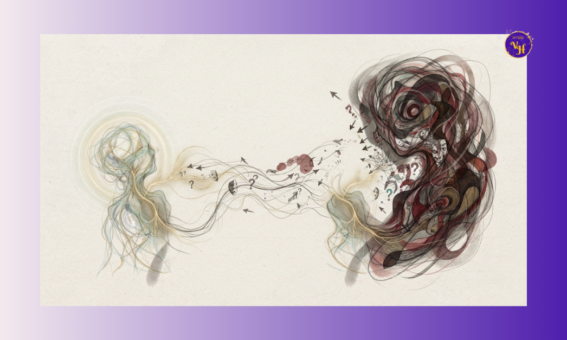
Give the situation a visual form. Take a sheet of paper and represent the choice in whatever way comes naturally to you. You might use colours, shapes, lines, images, words or simply place the different elements on the page. Let the page show you how the situation feels before you try to explain it.
- Where are you in relation to the other person?
- What feels close, distant, heavy, open, restricted or unclear?
- What stands out?
- What is missing?
Then look at what you have created and make yourself aware what meaning you have given to the situation.
- Which part feels most like you?
- Which part seems connected to the way you have learned to respond in this relationship?
- Does anything remind you of how you have learned to protect yourself or of anything that you have come to expect from the other person?
- What have you come to believe about yourself, the other person, people in general etc. in this relationship?
You can change the image, move something, add something or create another version showing what the situation would look like if you felt free to make your own choice. The difference between the two can reveal something that was difficult to put into words.
The creative process becomes another way of getting information about yourself. You are giving an experience a form that you can see, move around and respond to, rather than trying to produce something that looks good or interpret every detail correctly. Sometimes that makes a preference, a conflict or a possibility easier to recognise than thinking about it directly.
Then add a second step. Ask yourself: If I knew this person might disagree with my choice, what would I choose? Stay with the question long enough to notice whether a preference appears. If nothing comes, that is useful information too. You may have become so accustomed to adapting that your preference needs time and repeated attention before it becomes clear.
You can also ask:
- What does this choice mean to me?
- What am I telling myself about what it would mean if I chose this?
- What do I believe I would be saying about myself, the relationship, or the other person?
Sometimes the difficulty lies less in the choice itself than in the meaning we have attached to making it.
Then separate the different pieces of information.
- What do I want?
- What am I expecting the other person to want?
- What am I afraid might happen if I choose differently?
- What actually happened in similar situations before?
This helps you distinguish your present experience from memories, expectations and learned responses. It also gives you a way to notice when an old relationship experience is entering the present moment. Your nervous system may recognise the possibility of disapproval, conflict or withdrawal before you have consciously decided that anything is wrong. You can acknowledge that response without allowing it to decide what the present situation means.
Now ask yourself what you know about the situation as it is today:
- What has actually happened?
- What belongs to this person and this moment?
- What belongs to an earlier experience?
- What meaning have I automatically given the situation?
- What would I understand differently if I felt completely secure in the relationship?
This is where self-awareness becomes discernment. You are bringing together what you notice in your body, what you remember, what you believe, what you know about the present situation and what you actually want.
You can then make the decision. The purpose of the exercise is not to choose whatever feels easiest or to ignore another person’s needs. Sometimes their needs will genuinely matter to your decision. The important part is that you first know what your own preference is, so that taking another person into account becomes a conscious choice rather than an automatic adjustment. If the choice still feels difficult, you do not have to force certainty. You can name what you know, what you do not know, and what you are willing to find out through taking one step. This is part of rebuilding trust in your own capacity to meet what happens after you choose.
Repeat this with small decisions before applying it to situations with much more at stake. Each time you notice a preference, stay with it for a little longer. Each time you make a choice, notice what happens afterwards.
- Did the feared reaction actually occur?
- How did you feel having made the decision?
- Did the choice feel like yours?
This gives self-trust something concrete to build on because you are developing a lived record of noticing yourself, making choices and learning from what follows. Over time, these experiences become part of your internal reference point. You are learning what your own signals feel like, how your beliefs influence what you perceive, how relationship experiences can shape your expectations, and what happens when you remain connected to yourself while staying in relationship with another person. That is how an inner preference can gradually become an orientation you can rely on when you act.
Being able to hear your own answer before deciding what to do with it is a quiet part of developing agency. The more often you practise this, the more information you have about yourself. You begin to recognise your preferences earlier, understand your reactions with more precision, and make room for another person’s perspective without automatically making it the basis of your own choice.