
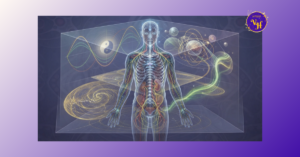
The Architecture of Integrated Regulation
Kinesiology as an Integrated Regulatory Science of the Human System
The human organism operates as a fully interconnected regulatory field where biochemistry, biomechanics, and the psyche merge into a singular experience. Within this framework, emotional well being, sleep quality, hormonal regulation, immune activity, and cognitive clarity are understood as different expressions of the same integrated network. Each of these domains unfolds according to its own physiological timing, continuously exchanging information to maintain homeostasis.
When the system encounters an intense stress load, its primary objective is to remain as functional as possible. The nervous system processes and distributes this stress, buffering it temporarily in areas where it causes the least disruption to immediate survival and daily management. This intelligent system has the potential to store stress anywhere across the entire organism, automatically directing it to whichever specific area causes the least immediate harm, depending entirely on the underlying cause of the stress or existing vulnerabilities and loads within the system. This process of buffering and holding can be understood in very direct, embodied terms as something carried within the body as literal holding and endurance.
Part 1: Temporal Organisation of the Nervous System and Experience
Kinesiological work is grounded in the understanding that the human organism functions as a continuously self-organising regulatory system. Physiological, emotional, and cognitive processes unfold simultaneously while following different temporal patterns of organisation and integration. This systemic organisation remains stable only through continuous interaction between incoming experience and internal regulatory capacity across time.
The nervous system does not process experience in a linear sequence. Instead, it operates through layered cycles of perception, evaluation, regulation, and adaptation. These cycles interact with each other across multiple biological domains, including autonomic, endocrine, immune, and cortical and cognitive processing networks. Each of these systems contributes to overall regulation while maintaining its own timing structure, and emotional experience, sleep regulation, hormonal activity, immune response, and cognitive clarity therefore emerge as different expressions of a single integrated regulatory field. These expressions remain dynamically linked through ongoing physiological coordination that constantly updates internal organisation. Multi-system coordination between the autonomous nervous system (ANS), endocrine, immune, and cortical systems ensures that no single domain operates in isolation, but always as part of an integrated physiological network.
Experience enters the system continuously. Its integration depends on internal conditions that allow processing to complete without interruption from new incoming stimuli. When incoming information exceeds the system’s capacity for integration, physiological activation remains active and continues to shape perception, behaviour, and internal organisation, and in this state the organism maintains continuity with unresolved physiological information. Regulation continues around incomplete processing cycles until sufficient internal stability allows for completion and integration, with unresolved activation remaining distributed across multiple regulatory layers of the system. Under these conditions, the system maintains adaptive coherence by distributing load across somatic, emotional, and cognitive layers, where it temporarily holds regulatory demand in the least disruptive configuration available for survival and functional continuity.
A central principle in kinesiology is that adaptation unfolds in phases rather than in uniform progression. Each phase reflects the system’s current regulatory priorities and its immediate requirements for maintaining functional coherence, and these phases typically involve physiological regulation across autonomic and endocrine pathways, emotional processing and affect regulation, cognitive orientation and meaning formation, and sensory integration and bodily awareness. Each layer contributes to system-wide organisation while following its own internal timing structure, and all layers remain continuously interactive within the same regulatory field. Each phase reflects how the organism reorganises under changing internal load conditions while maintaining global system stability.
The concept of temporal alignment is central to understanding integration. Experience becomes part of stable internal organisation when physiological processing, emotional evaluation, and cognitive structuring operate within compatible temporal windows, and when these processes are misaligned, the system continues to carry partially processed activation across time and operates from earlier regulatory states while simultaneously receiving new input. This creates a multi-layered adaptive process in which different aspects of experience are integrated at different times, resulting in overlapping phases of physiological and cognitive organisation across the system. This multi-layered adaptive architecture allows different aspects of the same experience to be integrated at different speeds depending on system capacity and regulatory priority.
Within kinesiology, these principles are operationalised through structured assessment of the body’s regulatory organisation. The interaction between muscular function, meridian systems, and physiological responses provides insight into how the organism distributes and processes regulatory load across different domains, and Part 2 expands on this functional mapping, including the 14 meridian system, the 42 muscle testing framework, and the role of stress as an organisational principle within the body.
Part 2: Stress as an Organising Principle and Systemic Mapping in Kinesiology
Stress in kinesiological terms is understood as a functional state of organisation within the human system. It reflects how the organism distributes energy, maintains stability, and prioritises regulatory demands across multiple physiological domains, and within this framework stress is not viewed as a singular experience but as a systemic configuration involving the autonomic nervous system, endocrine activity, muscular tone, fascial tension, and cognitive-emotional processing. These elements continuously interact and form a dynamic pattern of regulation that supports adaptation in real time, while maintaining continuous recalibration across all subsystems of the organism. This perspective frames stress as an adaptive regulatory configuration that continuously adjusts based on internal and external conditions, serving as a functional expression of systemic organisation under load rather than a malfunction.
A central feature of stress organisation is its role in shaping autonomic availability. Under increased regulatory load, the system adjusts energy distribution toward survival-oriented processes, influencing breathing patterns, muscular readiness, digestive function, and perceptual focus, and these adaptations are coordinated shifts across the entire organism rather than isolated responses.
The Interconnected Framework of the Body
Because stress is distributed dynamically across the entire organism based on individual vulnerabilities, the following points serve merely as specific examples of where and how the system might choose to hold tension within this global network:
- The Fascia: This structural network acts as a site of holding and endurance, capturing stress patterns within its fabric. Fascial structures play a significant role in this process, functioning as a continuous connective network that reflects and distributes mechanical and physiological tension throughout the body. Symmetrically, prolonged regulatory load may manifest as increased binding, reduced mobility, or altered tension distribution within this system, influencing overall somatic organisation. It reflects systemic load and participates in regulation by maintaining structural continuity across tissues, organs, and movement patterns, where this distributed tension pattern reflects how the organism maintains systemic stability under sustained load conditions.
- The Psoas Muscle: Within Eastern traditions and kinesiology, the psoas serves as an indicator muscle for the kidney system. This system is linked with detoxification on all levels and correlates with the emotional experience of fear. Muscular patterns, particularly in regions such as the psoas and related deep stabilising structures, reflect how the system maintains endurance under sustained internal or external pressure. These patterns are expressions of whole-system adaptation, where functional load is redistributed across interconnected structural and physiological networks, and their functional state reflects how the organism maintains structural integrity during ongoing regulatory demand. Together, the fascia and muscular system form an embodied expression of regulatory history, where repeated patterns of load distribution influence present physiological organisation, creating a somatic continuity in which past regulatory demands are reflected in current structural and functional patterns across the body.
- The Kidneys: This physiological connection matches ancient Hebrew Semitic perspectives, which describe the human being as feeling directly through the kidneys, illustrating how physical organs and emotions form a unified system.
- The Tensor Fascia Lata: Physical interconnectedness means that pressure on one area, such as the tensor fascia lata, frequently transmits sensation and brings relief to distant areas like the lower back.
Stress buffering is a core principle within this model, describing how the system distributes regulatory load dynamically to areas of least immediate disruption depending on individual vulnerabilities, current capacity, and existing structural organisation. This process allows the organism to maintain functional continuity and preserve system stability even under high levels of internal or external demand. Within this buffering process, stress can be temporarily held in different physiological regions depending on systemic priorities, meaning that the organism continuously redistributes activation across available somatic, autonomic, and cognitive layers, where each level contributes to maintaining overall coherence during periods of increased load. Cortisol regulation, sleep architecture, and autonomic shifts form part of this integrated system, as endocrine activity coordinates energy availability, recovery processes, and adaptive recalibration across time. These processes operate in continuous interaction with each other and with muscular and fascial systems, and sleep regulation in particular functions as a systemic reset phase in which integration and recalibration processes are consolidated.
Mapping the System
Precisely because the body can store stress anywhere depending on individual weak points and causes, a comprehensive mapping tool is required. To navigate this complex internal landscape, kinesiology utilises 42 indicator muscle tests across the 14 meridian system. This process serves several functions:
- It maps the current functional organisation of the organism.
- It reveals how biochemical, biomechanical, emotional, and cognitive processes are interacting at any given moment.
- It provides a comprehensive picture of where the organism is compensating and where stress affects regulation.
- It highlights the specific corrections and adjustments that the system prioritises in that exact moment.
Through these muscle tests, practitioners receive immediate biofeedback regarding how the organism organises itself in response to specific internal representations. This makes it possible to identify where stress is held and how the system chooses to navigate its recovery. The collective pattern forms a real-time map of regulatory organisation, capturing a dynamic representation of the organism’s current state of coherence, compensation, and adaptive organisation as they unfold in present time.
The 14 meridian system provides the structural framework within which these muscle responses are interpreted, as it represents functional energetic pathways through which physiological and regulatory processes are expressed. Within this model, meridians are not treated as isolated channels but as part of a continuous regulatory network that integrates muscular, emotional, cognitive, and physiological information, forming a unified mapping system where the interaction between muscle response patterns and meridian organisation reveals how biochemical, biomechanical, emotional, and cognitive processes interact. A key function of this system is the identification of compensation patterns, which describe how the organism redistributes regulatory load when certain pathways are under increased demand, representing an intelligent organisational response that preserves coherence by shifting functional responsibility across available physiological networks, identifying where the system is allocating energy, where it is holding tension, and where adaptive flexibility is reduced.
A key component of this methodology is the identification of internal representation patterns. The nervous system encodes experience not only through narrative memory but also through sensory, emotional, and physiological imprints distributed across the system. These internal representations influence how the system responds to current stimuli and how it anticipates future conditions. Language, imagery, and bodily response are continuously interlinked, and cognitive structures influence physiological states while physiological states shape perception and interpretation, forming a reciprocal relationship that defines representational processing, as a continuously updating feedback loop within the organism.
Within this context, kinesiology integrates principles also found in NLP-based representational systems. Internal imagery, language patterns, sensory coding, and physiological response patterns are understood as interconnected layers of the same regulatory process, and these layers shape how experience is organised, stored, and reactivated, and how adaptive responses are formed. This integration allows for a more detailed understanding of how the system encodes past experiences and how these encodings influence present regulatory behaviour, while remaining embedded in ongoing physiological regulation.
Kinesiology as an Integrated Regulatory Science of the Human System – Part 3 continues this structural mapping by focusing on how these encoded patterns reorganise across time, how cyclical regulation structures adaptation, and how the nervous system stabilises within continuous environmental and internal change.
Part 3: Integration, Cycles, and the Transition from Reactive Organisation to Adaptive Coherence
Human regulation follows cyclical patterns that are embedded within both biological timing and environmental rhythms. Natural cycles such as seasonal transitions provide a symbolic and physiological reference point for understanding how systems pause, reorganise, and re-establish internal coherence, and the solstice represents such a temporal structure where movement continues within a larger stable framework while internal processes are given space to complete their own organisation.
Within a biological context this reflects how the nervous system requires periods of reduced external updating in order to integrate accumulated experience into stable physiological and emotional structures, while maintaining continuity across ongoing systemic activity. This temporal architecture mirrors the solstice principle, serving as a biologically grounded version of time standing still, where processing continues without external acceleration within specific integration windows. These windows describe periods in which the nervous system is able to hold active experience without being forced into immediate overwriting by new input. In solstice-based organisation, these windows resemble the three-day stabilisation phase described in natural cycles, where accumulated experience is allowed to settle into embodied sufficiency before new orientation begins, ensuring that when such windows are compressed or repeatedly interrupted, the system continues to carry activation.
Integration occurs when experience is allowed to remain active within the system long enough for full processing to complete, and this includes sensory input, emotional activation, cognitive interpretation, and bodily response patterns. When this temporal stability is present, sensory input, emotional activation, cognitive interpretation, and physiological response can converge into coherent internal organisation rather than remaining fragmented across separate processing cycles, and alignment is supported, experience transitions from active regulation into stable internal organisation.
The system continuously works to reconcile present experience with stored internal models that are shaped not only as narrative memory but also as embodied physiological and sensory patterns distributed across the system, which remain active within ongoing regulatory processes. Natural biological rhythms provide a macro-structural reference system for these processes, as circadian, infradian, and seasonal cycles influence hormonal regulation, sleep quality, energy availability, and emotional processing. These rhythms function as nested environmental anchors that regulate the transition between phases of abundance, purification, polarity, and alignment, supporting the organism in aligning internal processes with external environmental cycles, preventing temporal disorganisation across regulatory domains.
The Role of Environment, Community, and Natural Rhythms
Our regulatory capacity is never developed in isolation. Relationships, the environment, movement, and our connection to the world around us all provide physiological cues that continuously shape how safe and adaptable the nervous system perceives the present moment to be.
This collective aspect of regulation highlights the significance of the wider environment, including the role of community and the rest of creation. For many individuals, a simple walk in nature acts as a restorative practice, directly supporting the system’s ongoing recalibration.
Observing recurring rhythms throughout the year helps people recognise patterns in their own physiology, emotions, cognition, and behaviour. These natural cycles provide valuable reference points for understanding how the nervous system organises adaptation and recovery over time.
Neuro-Linguistic Programming and Representational Systems
Language, internal imagery, physiology, emotions, and behaviour continuously influence one another. Representational systems from Neuro-Linguistic Programming (NLP) complement kinesiology by providing additional insight into how experiences become organised within the nervous system and how new patterns of regulation can emerge.
While it is easy to focus primarily on a specific stressor or trauma, the way that stress is perceived, processed, and represented on both a micro and macro level determines its impact on the organism. Internal imagery actively constructs anticipatory models of reality that influence physiological readiness, emotional regulation, and behavioural orientation, while posture, muscle tone, breathing patterns, and autonomic activity continuously reflect and shape these internal models, creating a tightly coupled bidirectional loop where perception is filtered through previously established internal representations.
NLP-based representational systems describe this interaction between language, imagery, sensory coding, and physiological response, where visual, auditory, kinesthetic, and linguistic patterns are understood as different access routes into the same underlying organisation of experience, allowing practitioners to identify how a person is organizing reality internally. Within a kinesiological context these systems are understood as expressions of one unified regulatory process that shapes perception and adaptation simultaneously, through continuously updating internal models that are always provisional and subject to ongoing recalibration depending on current physiological state and environmental input.
When emotional or physiological states become highly activated, the system often attempts to restore stability through automatic patterning, and these patterns can include protective interpretations, narrowed perception, or increased internal tension. Over time these responses become part of the system’s regulatory baseline, and reorganisation occurs when the system is able to access alternative internal configurations, including shifts from identifying with an emotional state toward recognising it as a transient physiological and representational event within the system.
In applied work, techniques such as symbolic representation, including assigning shape, colour, or spatial form to an emotional charge, can support this shift in internal organisation by increasing perceptual flexibility, creating a perceptual distance that allows the nervous system to reorganise without suppressing underlying physiological information. Within the solstice framework, this symbolic processing corresponds directly to structured ritual phases such as purification through fire or water imagery, celebration of embodied sufficiency, and cosmic alignment, providing a non-linear access point for regulatory change by allowing complex internal states to be processed in simplified perceptual structures that the system can more easily reorganise, expanding the range of possible internal configurations.
A Practical Tool for Shifting Perception
To work with these internal representations, specific tools can be used to alter how the nervous system interacts with an emotional state:
- Identification: First, the specific stress response, such as frustration, is identified and acknowledged.
- Externalisation: The feeling is assigned a physical property, such as imagining the frustration as a red ball of energy.
- Redistribution: The individual imagines removing this ball of energy from their immediate field, creating a conscious distinction between experiencing an emotion and becoming entirely identified with it.
This practice supports the understanding that a state is passing through the system rather than defining it.
Restoring Flexibility and Agency
The primary objective of this integrative approach is not to simply remove stress from life. Instead, the focus is on restoring flexibility within the system so that energy can be redistributed from survival prioritisation back into coherent functioning, agency, and self-regulation.
What creates lasting change is helping the nervous system recognise that it has more regulatory options available than it did when the original stress response or protective pattern was established. Once the system shifts from a survival-driven state into one of orientation and perception, flexibility naturally increases.
From a regulatory perspective, kinesiology focuses on restoring system flexibility rather than altering individual components. Emotional, cognitive, and physiological processes are approached as interconnected expressions of one system that continuously adapts based on internal and external input, and a central transition point occurs when the system moves from reactive organisation toward adaptive coherence. In reactive organisation responses are driven primarily by previously encoded patterns, while in adaptive coherence responses are shaped by present-time conditions and available regulatory options, reflecting the system’s ability to respond with access to a broader range of choices.
This shift is supported by increasing internal differentiation within the system, allowing multiple regulatory pathways to become accessible simultaneously, and enabling broader systemic responsiveness. This incremental transition leads to a phase of time collapse, where multiple layers of lived experience are held simultaneously within one coherent field, allowing past, present, and predictive organisation to converge into a unified physiological state.
Across all layers the system reorganises itself through cycles of activation, processing, integration, and stabilisation. These cycles are reflected in biological rhythms, emotional processing patterns, cognitive restructuring, and somatic adaptation, and natural environments, relational context, movement, and embodied awareness all contribute to this regulatory recalibration by providing continuous feedback signals that inform the system’s sense of safety, orientation, and coherence, within an ongoing adaptive regulatory field.
Multilayered Reorganisation and Autonomic Timing
When a system begins to restore its equilibrium, improvement occurs as a nonlinear process. Different regulatory systems change at varying paces, which means that emotional processing, sleep regulation, endocrine activity, and autonomic regulation follow separate timelines while continuously influencing one another.
This temporary lack of synchrony reflects ongoing internal regulation. The organism constantly recalibrates across multiple interconnected systems, following a functional sequence determined by its current priorities for maintaining stability. In kinesiology, we observe that the body reorganises in layers. As these physiological and emotional systems regain flexibility, they stabilise at different times.
From a kinesiological perspective, this multi-layered timing structure explains why adaptation is often experienced as non-linear, as a transient phase of desynchronisation may emerge when one subsystem is already reorganising while another is still completing earlier regulatory sequences, representing a natural feature of biological regulation where different processes such as autonomic, endocrine, immune, and cortical networks operate on distinct timing cycles and shift at different speeds. This desynchronisation corresponds to the transitional space between symbolic cycle phases and physiological recalibration, where parts of the system have already integrated while others remain in completion cycles.
Within kinesiology this entire process is understood as a unified field of regulation in which stress, adaptation, perception, and integration form one continuous dynamic system, and the aim is not to remove specific states but to support the organism in recognising and accessing the full range of its regulatory options within present-time experience, as part of continuous systemic self-organisation.
Kinesiology works directly with these continuous interactions. By utilizing the 42 indicator muscle tests to read the body’s immediate biofeedback, it becomes possible to map exactly where the system has become organised around protective patterns. This clinical framework allows practitioners to identify where stress is held and which exact corrections the organism prioritises in that moment to support adaptive regulation.
Final integration occurs as human experience emerges as a layered interaction between physiology, emotion, cognition, and environment, where regulation unfolds across time shaped by internal organisation, external context, and the system’s capacity for integration, and kinesiology operates within this field by mapping functional relationships within the body, observing regulatory patterns, and supporting the system in returning to flexible, adaptive coherence, bringing internal reference structures and external temporal cycles into final cosmic alignment and synchronisation within a continuously adaptive system of regulation.
If you want to continue exploring these principles in a wider context, read more in the blog article Celebration of Abundance, Purification, Cosmic Polarity, Integration, and Alignment, which extends the same underlying processes into a cyclical model of embodied experience, describing how regulation, completion, and internal coherence unfold across lived experience.