
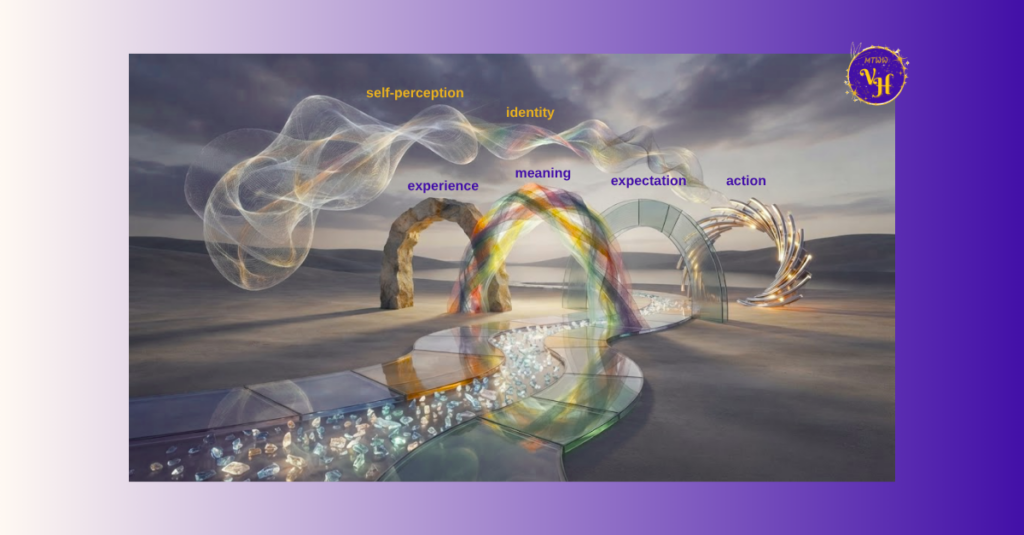
What if identity changes through the meaning we give our own experience?
1. How experience becomes identity
Someone keeps saying they want to make a change. In a quiet moment, they know what matters to them, understand what they want and make a decision that feels clear enough to follow. A few days later, an old pattern returns, and from the outside this can look like a problem of discipline or commitment. Internally, something more complex may be happening in the way the person experiences, interprets and remembers what happened.
Every experience gives us information, and attention determines which parts of that information become available to us. We notice what happened, how we felt, what happened in the body, how other people responded and what the experience seemed to say about us. The bodily and emotional response becomes part of the experience we are trying to understand, and the meaning we give that experience influences what we expect from ourselves and from what happens next.
One way to understand how this process unfolds is to recognise that every experience gives us information, and attention determines which parts of that information become available to us. We notice what happened, and our body and emotions respond to it. We then give the experience meaning, and that meaning influences what we expect from ourselves and from the next situation. Those expectations shape how we behave, and our behaviour creates new experiences that become part of the evidence from which we understand ourselves. As this evidence accumulates, it influences our self-perception, and over time, these changing perceptions contribute to the development of identity.
Each stage influences what becomes possible in the next. Previous experiences also influence what receives attention, which means that the process is continuously shaped by what we have already learned about ourselves and the world around us.
The meaning we give an experience is particularly important because an event does not arrive with a fixed statement about who we are. Someone can make a decision, experience anxiety afterwards and immediately interpret that anxiety as evidence that they have made the wrong choice. The experience can then become evidence for self-doubt, even when the bodily response itself contains several possible kinds of information.
Every action is also an experience of ourselves. When we make a decision, follow through on something that matters, return to an old pattern or change course, we are observing ourselves in action. We register whether we listened to our own perception, whether we stayed with a decision, whether we tolerated uncertainty and what happened internally while we were doing so.
This is one way identity develops through lived experience. A person who repeatedly experiences their own decisions as leading to conflict may gradually learn to doubt their judgement. Someone who repeatedly experiences themselves as capable of noticing what they need, making a considered choice and following through gathers different evidence about their own capacity.
Identity can therefore be understood partly as something we continually infer from accumulated evidence. We take in what we have done, what we have tolerated, how we have responded under pressure and what happened when we followed through. Over time, these observations influence what feels credible, familiar and possible about ourselves.
The evidence within this process is rarely neutral. Existing beliefs influence what receives attention, so someone who already expects themselves to be unreliable may give considerable weight to one abandoned decision while barely registering several moments of consistency. Someone who has begun to experience themselves as dependable may notice a small act of follow-through and allow that experience to count as evidence about who they are becoming.
This is why small, repeated actions can carry considerable developmental weight. A dramatic commitment can create one powerful experience, while an ordinary action repeated consistently provides many opportunities to observe oneself differently. Each repetition adds another piece of lived evidence from which self-perception can gradually be updated.
The experience has to be noticed for that evidence to become fully usable. Someone can make a decision that matters, follow through and experience discomfort, then immediately move on to the next demand. When the experience receives very little attention, much of what could have been learned from it remains outside conscious reflection, and an established self-perception can continue to organise future behaviour.
After an important moment, a useful question can be: What does this experience teach me about myself? It can also help to ask what meaning was assigned to the experience immediately, what happened in the body and emotions, and whether the conclusion being drawn describes the present situation or carries an older interpretation into it.
The body can feel settled, fragmented or watchful after a decision. These states can provide information about how the experience is being processed, while none of them automatically establishes whether a decision was right or wrong. Paying attention to them creates an opportunity to understand what is happening internally before the first interpretation becomes the only interpretation.
The meaning attached to discomfort deserves particular attention. Feeling anxious after setting a boundary does not by itself establish that the boundary was wrong. The anxiety may contain information about the current situation, an expectation formed through earlier experiences, or several things at once, and its meaning becomes clearer when the person stays curious about what is actually happening.
Integration develops through this kind of attention. An experience that remains isolated can continue to feel like evidence of failure, danger or inadequacy, while an experience understood in its wider context can become part of a more differentiated sense of self. The event remains part of the person’s history, while its meaning can become more precise and its influence on future expectations can become more flexible.
Identity therefore develops through more than the actions we repeat. It develops through what we notice in those actions, how our body and emotions respond, what meaning we give the experience, what expectations follow from that meaning and what evidence we allow ourselves to recognise over time.
2. How relationship experiences shape our ability to trust ourselves
The capacity to rely on our own perception develops within relationships. Earlier experiences can teach a person that belonging, approval or emotional safety depends on being agreeable, useful, quiet, highly responsive or closely attuned to other people’s needs. When this pattern is repeated, monitoring other people’s reactions can become an established way of maintaining connection.
A person may know intellectually that they are independent and capable while their emotional and behavioural responses continue to anticipate rejection, conflict or disconnection when they act from their own judgement. The original relationship circumstances may have changed, while the expectations formed through those experiences remain active.
The body can hold on to this learning long after the original situation has passed. Someone may consciously value autonomy while their nervous system still prepares for the consequences it once associated with expressing a need, disagreeing, making an independent decision or remaining with their own perception when another person sees things differently.
This can make consistent self-directed action feel internally expensive. A person may know what they think, feel or need and still have limited experience of treating that information as something they can reliably act upon when relational pressure appears.
This is where internal authority becomes relevant. Internal authority develops through repeated experiences of noticing what is present, staying with that information long enough to understand it, allowing one’s own perception to matter, making a decision from that awareness and discovering that the decision can be carried through as the situation unfolds.
Self-trust grows through this lived experience. A person begins to experience themselves as someone whose perception can be consulted, whose decisions can be carried through and who can remain present with themselves when discomfort appears. Over time, this can create the experience of being reliably trustworthy to oneself under conditions that previously made self-directed action difficult.
Discomfort becomes especially important in this process. Someone may set a boundary and then become anxious when the other person reacts badly. The anxiety is real, and its meaning remains open to investigation. The person can ask whether the feeling contains present information, an older expectation about conflict, or both.
A useful question is: What meaning did I immediately give this discomfort? If anxiety is interpreted as proof that the decision was wrong, the person may feel compelled to repair the situation by abandoning their own judgement. If the anxiety is recognised as information about an expectation that has been activated, there is more room to examine what is actually happening.
An old pattern may also be doing something that once mattered. It may be protecting against rejection, preserving a familiar form of connection or expecting a consequence that previously carried significance for safety. Understanding this gives the pattern a context and makes it easier to examine what belongs to the present situation.
Safety creates the conditions for this examination. When the nervous system expects self-directed choices to threaten connection, there may be very little space to notice what is happening before automatically adapting to another person. Internal and relational safety create room to stay present long enough to distinguish current information from an older expectation.
This distinction matters because internal authority is not the automatic obedience to every feeling or impulse. It involves listening carefully enough to recognise different kinds of information. A bodily response, an emotional reaction, a present need, a useful warning and an older expectation can all contribute to the same experience and require different forms of attention.
Forcing behaviour can interfere with this development. A person may successfully perform a new behaviour while internally learning that acting from themselves requires suppressing fear, uncertainty, needs or other internal signals. The visible behaviour changes while the underlying experience communicates that self-directed action requires leaving parts of oneself behind.
This can create further disconnection. The person may complete the action and still accumulate the experience that acting from themselves is costly. Future behaviour can then require even more force because the underlying expectation remains active, and the effort involved can become further evidence for the belief that this way of acting is difficult or unsafe.
A different experience becomes possible when someone can notice what is happening internally, stay with it long enough to understand it, make a decision and remain present as the consequences unfold. They may still feel anxious, fragmented or watchful. Discomfort can be present while the person continues to examine the situation, and confidence can be present without automatically establishing that a decision is correct.
Self-trust therefore becomes more precise than confidence. It includes the experience that we can listen to ourselves, make decisions with the information available, tolerate uncertainty, recognise when new information requires a change of course and remain connected to ourselves throughout that process.
Changing a decision later does not have to become evidence that the original perception was fundamentally untrustworthy. A trustworthy relationship with oneself includes the capacity to update a decision when circumstances change, new information appears or further reflection reveals something that was previously unavailable.
Relationship remains part of this capacity. Acting from oneself can include remaining connected to oneself when another person disagrees, becomes disappointed or responds differently than hoped. Internal authority gives the person more room to remain present in relationship while continuing to recognise their own experience.
3. What happens when we stop trusting our own judgement?
Someone knows they need to make a decision. In a quiet moment, they can explain what they want, understand what matters to them and feel sufficiently clear about what they are prepared to do. The difficulty may begin when the decision enters the relationship. Another person reacts, something changes in the atmosphere, uncertainty appears, and a judgement that felt clear only moments earlier can suddenly become difficult to trust.
From the outside, this can look like indecision. Internally, the person may be experiencing the consequences of allowing their own perception to guide their behaviour while another person’s response is becoming emotionally significant. The decision can remain understandable to them while their sense of safety around acting on it changes.
Earlier relationship experiences can make this especially powerful. If belonging, approval or emotional safety once depended on remaining agreeable, responsive or closely attuned to another person’s needs, self-directed choices may have acquired a particular emotional meaning. Expressing a preference may have been associated with conflict. Saying no may have threatened connection. Disagreement may have carried consequences that made another person’s reaction something to monitor closely.
Those circumstances may no longer exist, yet the learning can remain active. A person can consciously understand themselves as independent and capable while their emotional and behavioural responses continue to anticipate rejection, conflict or disconnection when they act from their own judgement. A present interaction can therefore activate an expectation that was formed through earlier experiences of relational uncertainty.
This can make self-directed action feel internally expensive. The person may genuinely know what they want and still experience a strong impulse to reconsider as soon as another person responds negatively. Their attention begins to move towards the other person’s reaction and the possible consequences for the relationship.
The body can make this shift noticeable before the person has consciously understood it. A decision that initially felt settled may be followed by tension, watchfulness, anxiety or a sense of fragmentation once the other person reacts. These responses become part of the information available to the person. The body registers the significance of the interaction, while the person still has to understand what the response relates to.
This becomes particularly important when discomfort is given an immediate meaning. Someone may set a boundary and then feel anxious when the other person reacts badly. The anxiety can quickly become a conclusion: perhaps the boundary was too much, perhaps the decision was selfish, perhaps they have misunderstood the situation. The person may then feel an urge to change the decision in order to reduce the discomfort and restore a sense of connection.
The anxiety itself can have several sources. It may reflect something important in the current interaction. It may also carry an expectation learned through earlier relationships. Sometimes both are present at once. Understanding the experience requires attention to what happened before the anxiety appeared and what changed afterwards.
A person can begin by following the sequence closely. What did they think before the other person responded? What happened in the interaction? What did they notice in their body afterwards? What did they immediately conclude about themselves or about the decision? The sequence can reveal how quickly a present reaction became connected to a judgement about the self.
The distinction between present information and older expectation is particularly useful here. A reaction from another person may introduce information that genuinely matters to the decision. It may reveal something the person had not considered, change the circumstances or make a consequence visible. The reaction may also resemble an earlier relational situation closely enough to activate an expectation about rejection or loss of connection.
Trusting one’s judgement therefore involves remaining engaged with one’s own perception while listening to what another person communicates. The person can ask what has actually changed, what information has become available and whether their own position is still accessible to them. Another person’s response becomes part of the decision-making process without determining the meaning of the entire experience.
A later change of decision can emerge from this process. The person may hear something that changes their understanding, recognise a consequence they had overlooked or realise that their original judgement needs to be adjusted. They may also notice that the urge to change appeared immediately after relational tension increased. Paying attention to this timing helps the person understand what is influencing the decision.
The same applies when the person continues with the original decision. They can examine what is supporting that choice and remain aware of the reasons they are staying with it. Follow-through then becomes an experience in which the person observes their own capacity to continue acting from a considered judgement while the relationship contains uncertainty or disagreement.
This experience can be very different from the immediate relief that may follow changing course. If changing a decision repeatedly reduces relational tension, that relief can become reinforcing. The person may gradually learn to associate self-abandonment with safety and resolution. Future decisions can then become more difficult because the anticipated discomfort of remaining with one’s own judgement is already part of the experience.
The meaning assigned to these moments influences what the person carries forward. Anxiety can become evidence for the belief that their judgement is unreliable. It can also become information about an expectation that has been activated. The interpretation affects what the person expects when a similar situation arises again.
An old pattern may have made sense in its original context. It may have helped the person anticipate rejection, preserve connection or avoid consequences that once felt significant. Recognising this history gives the present response a context. The person can understand why the impulse to adapt appears without assuming that the same adaptation is required now.
This creates room within the decision-making process. The person can notice the expectation, remain aware of the discomfort it produces and continue gathering information about the present situation. They have more opportunity to discover what they actually think before responding to the relational pressure.
This becomes especially relevant when another person disagrees or becomes disappointed. If connection has historically depended on adaptation, the impulse to repair the relationship may become immediate. Attention can become focused on the other person’s emotional state, while awareness of one’s own position becomes harder to maintain.
Internal and relational safety create more room in this moment. When the person does not have to resolve the relational tension immediately, they can remain present long enough to understand their own response. They can listen to the other person, register their own reaction and allow the decision to remain open for examination.
The person may still be uncertain. They may not know whether their anxiety belongs mainly to the current interaction, an older expectation or several parts of the experience at once. They can remain with that uncertainty while continuing to observe what is happening and what information becomes available.
The guiding questions can therefore become: What am I actually noticing now? What changed when the other person responded? What meaning did I immediately give my discomfort? Is that meaning supported by what is happening in the present, or does it resemble something I learned earlier? What do I need in order to remain connected to my own judgement while I consider what the other person is communicating?
These questions create a way of examining the decision while keeping the person’s own perception available throughout the process. The person has time to understand the reaction, consider new information and decide whether anything in their original judgement needs to change.
The capacity developed here is the ability to remain connected to one’s own judgement while a relationship is placing pressure on it. A person can experience uncertainty, hear another perspective, notice anxiety and continue to have access to what they themselves perceive.
When this happens repeatedly, the decision becomes an experience of how the person relates to themselves under relational pressure. They begin to encounter their own judgement as something that can remain present while a difficult interaction unfolds.
4. How self-trust and identity development influence each other
Repeated experiences of making decisions under emotional or relational pressure gradually provide a person with information about their own capacity. Each situation allows them to observe whether they can notice their own perception, remain connected to it when uncertainty appears, make a decision and continue to engage with that decision as the situation unfolds. The significance of these experiences grows through repetition because each one adds to what the person knows about themselves from direct experience.
Self-trust develops through this accumulated experience. When a person repeatedly discovers that their own perception remains accessible during difficult circumstances, consulting themselves becomes increasingly familiar. They learn that uncertainty, emotional intensity or another person’s reaction can occur without making their own perception disappear. They also learn that making a decision does not require immediate certainty about every consequence. The capacity to remain present with their own judgement becomes something they have experienced themselves rather than something they merely believe about themselves.
This changes what the person expects when a future situation becomes difficult. Previous experiences provide a reference point for what they anticipate they can do. They may expect themselves to be able to pause, notice what is happening internally, consider new information and return to their own perception when the situation becomes unclear. Their history therefore becomes part of the way they enter the next decision.
The same experiences contribute to self-perception. A person develops an understanding of themselves through what they repeatedly observe in their own behaviour. When they have experienced themselves recognising their needs, making considered choices, tolerating uncertainty and remaining connected to themselves under pressure, these capacities become part of what they know about themselves. Self-perception becomes increasingly based on demonstrated capacities rather than on an abstract image of who they should be.
This development also changes which experiences become available to the person. Someone who expects their own judgement to be unreliable may leave decisions quickly, adapt immediately to another person’s response or treat discomfort as a reason to withdraw. Those actions create experiences that provide further material for self-perception. A person who has developed greater access to self-trust can remain with a decision long enough to gather more information, notice anxiety without allowing it to determine the entire response and remain engaged with a relationship while disagreement is present. Their capacity to act from themselves therefore influences the experiences through which further self-understanding develops.
The meaning given to these experiences becomes part of that development. A person may recognise that an anxious response arose when another person’s disappointment activated an older expectation about connection. They may notice what their body communicated, what they thought before the reaction occurred and what changed afterwards. They can then understand the experience in relation to both the present situation and what they have learned through earlier relationships. This allows the experience to become more specific information about their own patterns and capacities.
Earlier experiences can therefore acquire a different place within personal history. A moment in which the person abandoned their own judgement may once have been understood simply as a failure to follow through. With greater experience, they may recognise the conditions in which that response occurred, what they were trying to protect or preserve and what they knew at the time. The event remains part of their history, while its meaning becomes more differentiated. Later experiences can provide information that was not available when the original event occurred.
Integration supports continuity across this development. The person can recognise that an earlier response belonged to a particular set of circumstances while also recognising that their present capacity has developed. Their history does not have to be divided into incompatible versions of themselves. Earlier experiences, current capacities and new learning can become part of one developing understanding of who they are.
The relationship between self-trust and identity therefore develops through an ongoing exchange between experience and self-perception. What a person experiences themselves as capable of doing influences what they expect and how they approach future situations. The experiences created through those expectations and actions then provide further information about their capacities. Over time, this accumulated history influences which meanings feel credible, which responses feel available and which aspects of themselves they recognise most readily.
Relationship experience remains part of this process. Earlier experiences can shape expectations about safety and connection, and these expectations can influence how much internal authority a person can access when another person’s response becomes important. As the person develops greater capacity to remain connected to themselves within relationship, they gain experiences in which self-direction and continued participation in relationship can coexist. These experiences become part of the evidence available for future self-understanding.
A decision therefore becomes more than an isolated choice within this longer development. The person can notice their own perception, make a choice, encounter uncertainty or relational pressure, examine what is happening internally and determine whether the decision still reflects what they understand to be true. They may follow through, revise the decision when new information becomes relevant or remain with it while continuing to observe themselves. Each of these responses provides information about how they relate to their own judgement.
Repeated experiences of this kind gradually influence what feels possible. The person becomes familiar with consulting their own perception, tolerating uncertainty, remaining present during discomfort and updating their understanding when circumstances provide new information. These capacities become part of the person’s available repertoire of responses. Future decisions are therefore approached with a history of lived experience rather than from an entirely new position each time.
This history also gives identity a concrete foundation. The person knows something about themselves because they have encountered situations that required real choices and have observed their own responses. Their understanding of themselves is connected to experiences that carried emotional and relational significance. They can recognise themselves as someone who has developed particular capacities through circumstances they have actually lived through.
Self-trust consequently becomes part of identity development over time. The person has accumulated experiences in which they were able to return to their own perception, remain present with themselves and learn from what happened. These experiences contribute to an internal expectation that they can remain accessible to themselves when something becomes uncertain. That expectation then influences how they approach the next experience.
Identity develops through the same accumulation. The person carries forward what they have discovered about their own capacity, and that history influences what they notice, what they expect and how they behave. Their developing sense of self therefore participates in the creation of future experience. What they have learned about themselves affects the way they enter the next situation, which provides further opportunities to observe and refine that understanding.
The process also allows identity to remain continuous while changing. A person’s responses can develop as they gain experience without requiring them to abandon the sense that they are the same person who is learning. They can recognise that they once responded differently, understand the circumstances that shaped that response and incorporate what has changed into their present understanding of themselves.
Over time, identity can become increasingly grounded in capacities that have been demonstrated across situations: noticing what is present, recognising personal needs, making decisions from one’s own awareness, tolerating uncertainty, remaining connected during relational pressure, following through when appropriate, revising a decision when new information matters and learning from the consequences. These capacities become meaningful because they have been experienced repeatedly rather than simply imagined.
The developing sense of self then enters the next experience with this history behind it. A person carries forward an understanding of what they have discovered about themselves, and that understanding shapes their expectations and attention. The next decision adds another experience to that history. Through this continuing process, self-trust becomes grounded in lived experience, self-perception becomes increasingly informed by what has actually been demonstrated, and identity develops through the capacities a person has repeatedly experienced themselves to possess.